
Inspections available select weekdays only, no weekends. Check the calendar below and book early while slots last!
Getting Started & Booking
How do I book an inspection?
Everything is done online through our booking page. Check availability, select your inspection type, enter the vehicle details and seller location, and pay securely — the whole process takes just a few minutes.
We don't take appointments by phone. Booking online ensures your slot is confirmed instantly and lets us get started on your vehicle research right away.
When are you available? Do you work weekends?
We inspect select weekdays only — no weekends. Our current availability is always shown on the booking calendar. On days we're available, we conduct inspections from sunrise to approximately 3:00 PM.
Our focused weekday schedule means your inspector is never rushed between jobs — you get our full attention on your vehicle.
Can I get a same-day inspection?
Same-day slots are rare since our schedule typically fills days in advance. If we do have same-day availability, it will appear on the Platinum booking page as a dropdown option or note — if you don't see it, we're not available that day.
A $40 same-day fee applies for any inspection booked after 9:00 PM the night before.
What's the full process from booking to getting my report?
- Let the seller know you'd like to have the vehicle inspected on one of our upcoming available days.
- Book and pay online — include the VIN so we can start your vehicle research immediately.
- We send you a confirmation email with vehicle history, ownership details, title/sales records, and service records (when available).
- On the morning of the inspection, we contact the seller to confirm availability and arrange a 30-minute arrival window.
- We notify you of the confirmed arrival time and your estimated report delivery time.
- We arrive, perform the inspection on-site, and email your detailed PDF report directly from the inspection the moment it's complete.
- Review your report, ask us any questions, and buy with complete confidence — or walk away knowing you dodged a costly mistake.
How do I prepare the seller for the inspection?
Just let the seller know the following:
- You'd like to have the vehicle independently inspected by PDXinspections on one of our available weekdays.
- We come to them — at their home, business, or the dealership. No need to move the vehicle.
- We'll contact them on the morning of the inspection to confirm a 30-minute arrival window.
- The inspection takes approximately 1.25–2 hours for a Platinum inspection.
Most sellers are very comfortable with this process. Private sellers who work during the day often prefer we inspect at their workplace, or with a neighbor/family member present at home.
What is your cancellation and refund policy?
Payment processing fees (approx. 3%) are non-refundable in all cases. Any refund issued will be for the original payment amount minus the actual processing fees charged to us.
Refund minus $50 fee — the following situations qualify for a refund with a $50 deduction to cover our time, processing fees, research, and any reports or information already provided:
- You cancel with sufficient notice before the inspection is scheduled for the day.
- The vehicle sells before we have confirmed with the seller on the day of the inspection.
- We discover information during our research that makes the inspection unnecessary (e.g., serious title issue, flood history, undisclosed major accident).
Minimum $80 charge — if any of the following occur after we have already confirmed with the seller on the morning of the inspection:
- We attempt to contact the seller and are unable to reach them despite prior confirmation of our arrival.
- The seller no-shows or is unavailable when we arrive.
- The vehicle sells after our confirmed arrival window.
- You cancel the inspection on the day of the inspection.
This minimum charge covers merchant fees, research already provided, the lost inspection slot, and a portion of our travel time and expenses.
What's your service area?
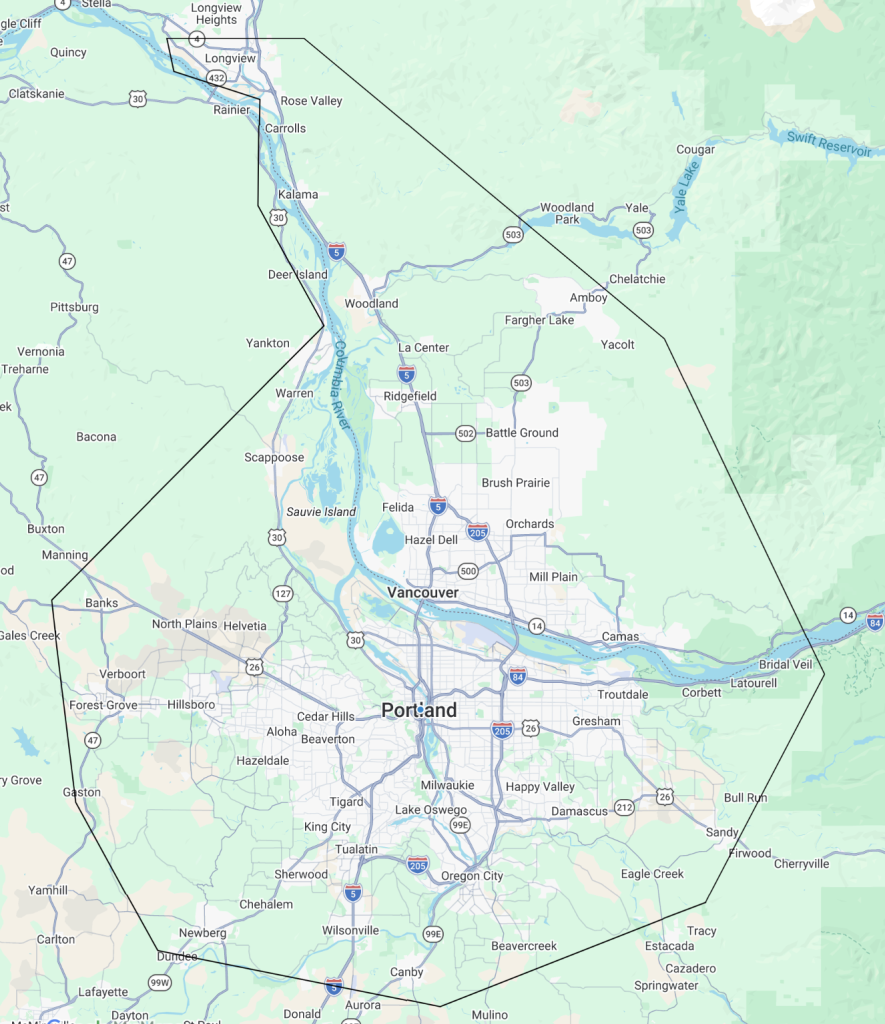
We cover the full Portland and Vancouver metro area — generally as far south as Wilsonville, north to Kelso/Longview WA, east to Sandy and Corbett, and west to Forest Grove and Banks.
Our Platinum booking page includes a pricing calculator that automatically shows the cost based on the vehicle's location. If the location appears in the calculator, we'll go there.
The Inspection Process
Do I need to be present for the inspection?
No — you don't need to be there. We inspect on your behalf and email the report the moment we're done.
If you're local, we recommend viewing the vehicle yourself first. Online listings often hide condition issues that would make an inspection unnecessary.
Out-of-state buyers: We make remote purchases straightforward. Add our HD video walk-around package at booking and you'll receive a full visual record of the vehicle alongside your written report — so you can see everything for yourself before committing to travel or a wire transfer.
How long does the inspection take?
| Inspection Type | Typical Duration |
|---|---|
| Platinum | 1.25 – 2 hours |
| Gold | 45 min – 1 hour |
| Bronze | ~45 minutes |
High-end, older, or rough vehicles may require additional time. Out-of-state video packages add 1–2 hours.
How quickly will I receive the inspection report?
Your report is emailed the moment the inspection is complete — directly from the field. If we finish at 11:30 AM, you'll have the report in your inbox by 11:31 AM.
PDXinspections was the first company to develop the technology that lets us build your report as we go and deliver it instantly upon completion. No waiting until end of day, no 24–48 hour turnaround. When the vehicle you want is selling fast, timing matters.
What does the inspection report include?
Your report is a detailed 6–10 page PDF that covers every system and component inspected, with photos documenting findings. It's written in plain language — no jargon — and items of concern are clearly highlighted.
Every inspection also includes our exclusive PDXinspections PastCheck Curated History Report — an industry-leading vehicle history including sales data, service records (when available), auction records, and more. This is provided after booking once you supply the VIN.
The PDF is easily viewable on any phone, tablet, or computer and can be shared with your agent, family member, or mechanic.
SamplesWhat if the inspection finds serious problems?
That's exactly what we're here for. Our report documents every finding clearly, and we're available after delivery to answer your questions and help you understand the severity of any issues.
Armed with a detailed report, you have several options:
- Negotiate a price reduction to account for needed repairs.
- Request the seller fix the issues before completing the purchase.
- Walk away knowing you avoided a potentially costly mistake.
Oregon is not a "right of return" state — once you buy, the vehicle is yours regardless of issues that surface later. An inspection before purchase is your only best protection.
Can I use the report to negotiate the price?
Absolutely — and this is one of the most valuable uses of our report. A documented, objective third-party inspection gives you concrete leverage.
We regularly find issues that buyers successfully use to negotiate hundreds or even thousands off the asking price — far more than the cost of the inspection itself. Even on certified pre-owned vehicles, roughly 80% of the vehicles we inspect show evidence of prior paintwork or accident repairs that justify renegotiation.
How is your inspection different from a dealership inspection?
The critical difference is objectivity. A dealer's inspection is performed by someone who has a financial interest in selling you that vehicle. Ours is not.
- We use significantly more diagnostic equipment than any dealer's lot inspection — including tools most dealers have never heard of.
- We have no repair shop, no parts department, and no vehicles to sell. We have zero financial motive beyond giving you an accurate report.
- Many CPO (Certified Pre-Owned) programs are largely marketing — the "certification" standards vary widely. Our inspection is consistent, thorough, and documented every time.
We don't refer or affiliate with any dealership or repair shop — ever. That independence is the foundation of what we do.
Can you verify if a timing belt has been replaced?
We cannot definitively confirm a timing belt replacement — it's an internal component that requires significant disassembly to access, which is outside the scope of any mobile pre-purchase inspection.
What we can do is look for indirect evidence: service records, stickers or stamps from a prior service facility, tool marks on the timing cover, condition of accessory belts (usually replaced at the same time), and active oil leaks from cam/crank seals that could degrade the belt.
Do you perform compression testing?
We don't perform traditional compression tests on modern vehicles — and for good reason. On late-model computerized vehicles, compression issues are far better detected through our digital engine analyzer, 5-gas exhaust analyzer, factory-level scan data, and drivability assessment. These tools give a more complete picture and don't require any engine disassembly. Compression testing also requires partial disassembly that isn't appropriate in a mobile pre-purchase setting.
In practice, if a vehicle's condition were severe enough to warrant a compression test, it would have already failed our inspection on other grounds well before we got to that point.
For older carbureted vehicles where compression testing is more relevant, we recommend a specialist shop rather than a mobile inspection service. We are a modern vehicle inspection company and don't specialize in or have significant experience with older and classic vehicles.
Inspection Types & Pricing
How much does an inspection cost?
Pricing starts at approximately $179 in Vancouver, Washington, increasing from there depending on inspection type, vehicle, and location. Our booking page includes a real-time pricing calculator — enter the vehicle type and location and it shows you the exact cost instantly.
All inspections include our PDXinspections PastCheck Curated History Report (vehicle history, service records, and more) at no extra charge — or available separately for $50 at this page.
What are the differences between Platinum, Gold, and Bronze?
| Feature | Platinum | Gold | Bronze |
|---|---|---|---|
| Best for | Most modern vehicles | 0-3 Years old with less than 36K miles | Older/high-mileage/budget vehicles |
| Lift to inspect undercarriage | ✓ Yes | ✗ No | ✗ No |
| Test drive | ✓ Yes | ✗ No | ✗ No |
| Full electronics scan | ✓ Yes | Basic | Basic |
| Paint meter / accident check | ✓ Yes | ✓ Yes | ✓ Yes |
| Duration | 1.25–2 hrs | 45–60 min | ~45 min |
The Platinum is our most popular and is right for the vast majority of buyers. Compare all three in detail →
Should I get an inspection on a certified pre-owned (CPO) or newer vehicle?
Yes — and here's why. Approximately 80% of the vehicles we inspect show evidence of prior paintwork or accident repairs, including many CPO vehicles from reputable dealers. CPO programs vary widely in their standards and are largely a marketing designation.
Even on newer vehicles, costly maintenance issues — tires, brakes, and other wear items — commonly arise between 30,000–40,000 miles and are routinely overlooked or undisclosed. Common findings also include burnt-out lights, missing spare tires, and — in one memorable case — a three-year-old MINI Cooper with a blown head gasket being sold at a franchised dealership.
Our Gold inspections start at $149 in Vancouver, Washington. The cost of a basic diagnostic fee — let alone a repair — far exceeds that.
Do you offer post-purchase inspections, failure analysis, or litigation support?
No. Our inspections are strictly pre-purchase only. We do not offer post-purchase diagnostics, diminished value assessments, expert witness reports, or support for insurance claims, legal disputes, or litigation of any kind.
Our inspections are performed onsite in a limited timeframe using visual and electronic methods on accessible components. Post-purchase and litigation work is a fundamentally different discipline — it often requires deeper disassembly, extended testing periods, court-admissible documentation standards, and expert testimony, none of which align with our mobile pre-purchase service model.
For those needs, search for a "vehicle expert witness Oregon" or a forensic mechanic specializing in automotive litigation support.
Vehicles We Inspect
What vehicles do you specialize in?
We specialize in modern, computerized vehicles — 1996 and newer. This is where our expertise and tooling are optimized. About 90% of our inspections are on 2010 or newer vehicles.
1996 is the OBD-II cutoff year — vehicles from that year forward have standardized onboard diagnostics that our factory-level scan tools are built to access. This gives us visibility into engine performance modules, transmission modules, airbag systems, ABS, body controllers, and more.
We've inspected everything from everyday Toyotas, Hondas, Subarus, and BMWs to high-end vehicles including a $250K Bentley, a $150K Ford GT, and a $130K Mercedes-Benz.
We do not inspect Land Rover/Range Rover products.
Do you inspect electric vehicles (EVs) and hybrids — including Teslas?
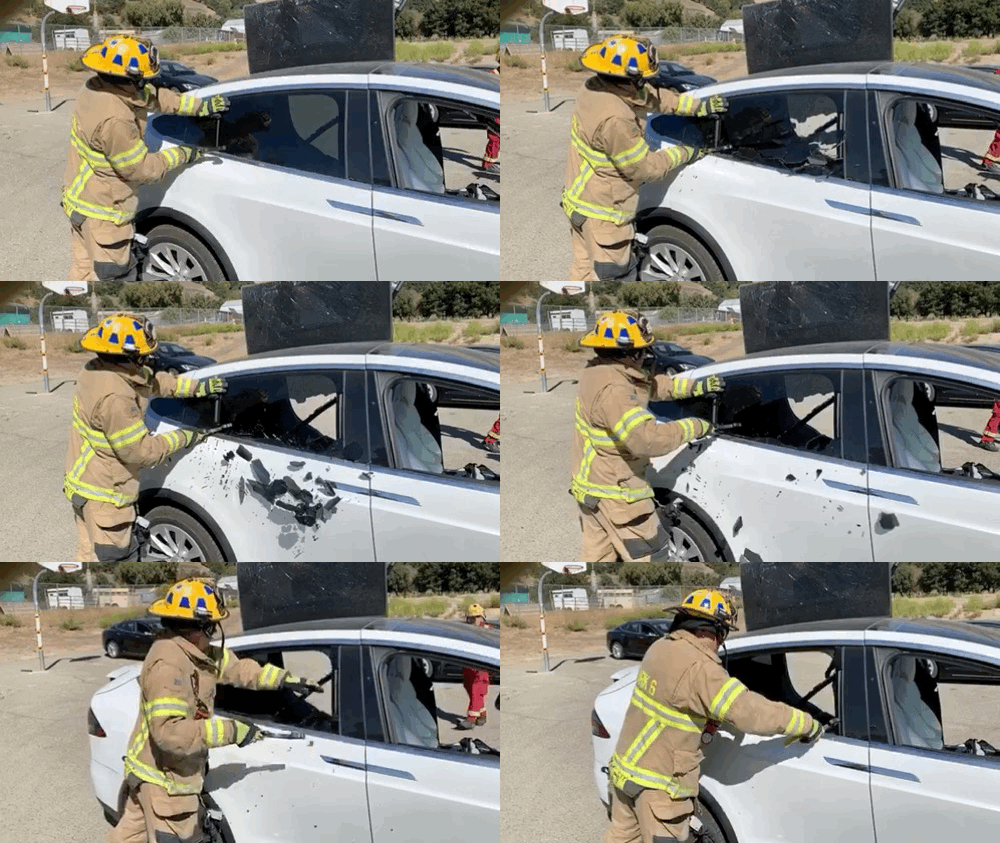
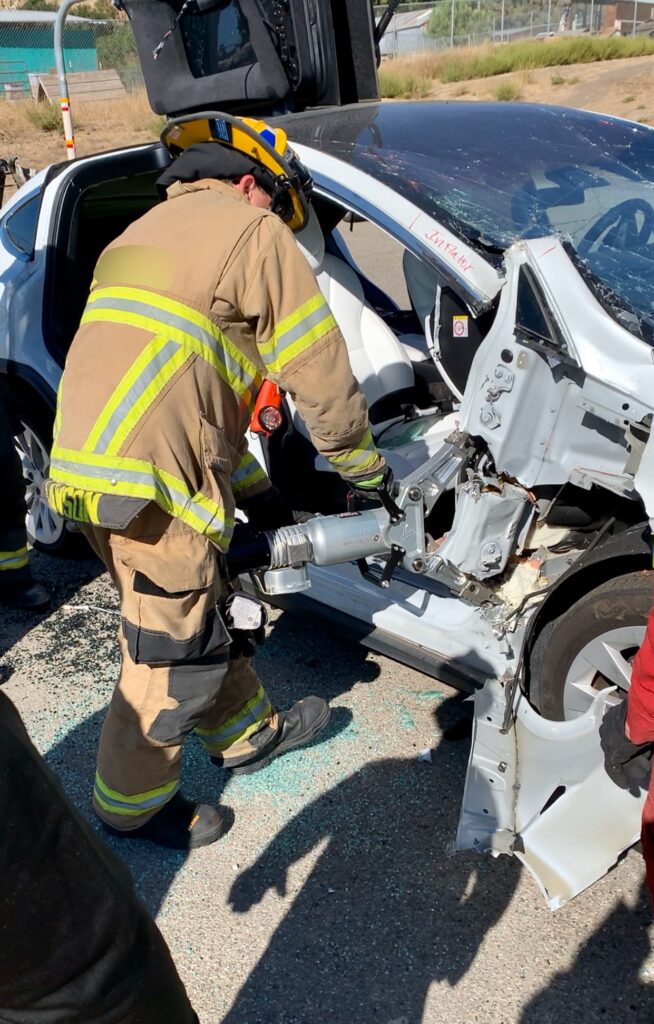
Yes, absolutely. We are highly specialized in hybrid and electric vehicle (EV) inspections, making us an ideal choice. Our owner Josh currently drives a 2024 Tesla Model 3 Performance and a 2025 GMC Sierra Denali EV, and has previously owned a Tesla Model Y, Model S, Model 3, Chevrolet Volts, GMC Yukon Denali Hybrid, and Toyota Prius models. Josh is also a career Firefighter/Engineer Paramedic who has completed Tesla-sponsored training and teaches EV safety and auto extrication techniques to fire departments working with electric vehicles.
Our EV/hybrid inspection goes far beyond visual checks:
- Full computer access to Battery, PCM, and Hybrid modules
- Past, current, and pending trouble codes
- Battery metrics: state of charge, internal resistance, cell-to-cell voltages
- Tesla-specific service menu access for full system history
- Fuel economy monitoring in hybrids as an indicator of battery performance
- Known model-specific issue checks (e.g., battery degradation on Nissan Leaf, battery/transmission issues on older Civic Hybrids)
As EVs become an increasingly large share of the used car market, having an inspector who actually lives with and understands these vehicles daily is a meaningful advantage. We now do so many EV inspections we have developed our own EV specific report, eliminating non relevant inspection points and adding EV specific checks.
Do you inspect diesel vehicles?
Yes, on non-commercial, lower-mileage diesel vehicles. Since traditional exhaust analyzers don't work on diesels, we are only able to use our dealer-level diagnostic equipment and visually inspect exhaust for excessive smoke.
We recommend older diesel vehicles with high mileage be taken to a diesel specialist or dealership capable of smoke opacity testing when needed.
Do you inspect salvage, rebuilt, or flood title vehicles?
We do inspect them — we're not fans of them — and if you're seriously considering one, you absolutely should have it inspected. All salvage vehicles 8 years old or newer require our Platinum inspection.
We always recommend starting by asking the seller for receipts for items such as the airbags, seat belt pre-tensioners, and other safety-related parts to ensure they were actually replaced — and hopefully replaced with factory new parts rather than used ones. Every so often we inspect one that was properly repaired and it's genuinely difficult to spot the previous damage. Ideally this is how you'd want to find them, but these situations are rare.
That said, we strongly advise against buying salvage title vehicles in most cases. In most cases an insurance company pays off an accident vehicle when the cost of repairs approaches 80% of the vehicle's market value — so it's usually not the "minor accident" you'll often see advertised. Most banks won't finance them, some insurers won't cover them, and resale is difficult. Please don't get caught up in the pricing — unless this is a vehicle you'll drive into the ground, when you go to sell it you'll take the hit on the other side as well. The skepticism you have now as a buyer, the future buyer will have too.
On flood vehicles specifically: vehicles don't typically get declared a total loss for water damage that only reached the wheels. If a vehicle has a flood or rebuilt title, assume the damage was significant — and on a modern computerized vehicle, that can be particularly devastating.
Think of it this way: would you willingly fly in an airplane that had been crashed and rebuilt? Or buy a house that had been flooded or had a soft foundation? We almost always recommend a higher-mileage, properly maintained clean-title vehicle over a salvage title vehicle. These vehicles are typically rebuilt as cheaply as possible with the intent to maximize profit, and we often find major issues or shoddy repairs as a result.
Why should I be concerned about salt-belt vehicles?
Vehicles from northern/eastern states spend winters exposed to road salt, which corrodes components from the inside out, long before you see visible rust. Salt penetrates brake lines, suspension fasteners, electrical connectors, and hidden body seams, causing damage that may not surface for years. A vehicle that spent 5–7 winters in states like New Jersey, New York, or Pennsylvania can develop serious corrosion issues by the time you buy it used, even if it looks clean cosmetically. Look for rust throughout the undercarriage, brake calipers, and door hinges.
The biggest concerns are brake line corrosion (which can lead to brake failure), suspension components seizing (tie rods, ball joints, control arms), and possible electrical gremlins from corroded wiring harnesses and connectors. You might notice soft brake pedals, clunking from the suspension, windows or door locks that don't work reliably, or dashboard warning lights that appear and disappear. Many of these issues could be safety-critical and would require immediate attention at a potentially inflated cost.
What does premature salt-related repair cost?
Salt-belt vehicles typically experience premature brake, suspension, and electrical failures 5–10 years earlier than their non-salt-exposed counterparts (say a car that spent its entire life in the PNW, for example). Beyond the base repair costs (brake lines: $500–$1,500, suspension components: $300–$800 per part, electrical repairs: $200–$2,000+), you'll encounter significant labor charges for seized fasteners. Rusted bolts commonly seize solid, requiring technicians to drill them out, tap new holes, or replace studs entirely, adding $200–$600+ in unexpected labor per repair. A vehicle with documented salt exposure also commands 10–20% lower resale value compared to the same year and mileage with a clean history.
Do you inspect classic or pre-1996 vehicles?
No, unfortunately we are not a suitable fit for inspecting classic or pre-1996 vehicles.
Our business is intentionally structured, tooled, and specialized for late-model, high-tech, computerized vehicles — approximately 90% of the vehicles we inspect are 2010 or newer.
Why We Stick to Modern Vehicles
The year 1996 is the crucial dividing line for our business, as it marks the general cutoff for the OBD-II (On-Board Diagnostics II) standard.
- Technology Gap: Our most valuable tool is the enhanced scan tool, which grants full computer access to modern systems. Vehicles older than 1996 lack this capability, meaning our core diagnostic advantage is eliminated.
- Inspection Difference: Older engines rely on basic mechanical integrity, which often requires highly invasive tests (like compression or leakdown tests) to assess engine health. A mobile service cannot perform these tear-down procedures due to time and liability constraints.
Our Recommendation for Classic Cars
You will be best served by finding a shop that specializes in the mechanics and restoration of classic cars. We strongly recommend having the seller drop the vehicle off at a reputable classic car shop or specialty dealer in the area — they have the necessary equipment and expertise for the hands-on, invasive checks that a proper classic car inspection requires.
In the Portland area, search for shops specializing in vintage car evaluations or restoration to find the right fit.
Do you inspect RVs, adventure vans, or commercial vehicles?
We can offer a limited inspection on later-model adventure vans and light/medium commercial vehicles that use powertrains we're familiar with — modern Ford, Chevy, or Dodge gas/diesel chassis. Our inspection focuses primarily on the vehicle's motive functions, and we do not inspect the residential or aftermarket aspects of an RV or adventure van. Here's what's in and out of scope:
- Mechanical/Powertrain: ✓ Yes — engine, transmission, suspension, brakes, and chassis electronics
- Vehicle Exterior: ✓ Yes — paint quality, body panels, and lights
- Interior "House" Systems: ✗ No — appliances, plumbing, A/C, slides, leveling systems, roof, etc.
- Large Commercial or Non-Standard Engines: ✗ No
Pricing for these vehicles is based on our equivalent heavy-duty truck category. If a test drive is needed, please email us before booking so we can confirm it can be arranged.
For a full evaluation of an RV's living systems, you'll be better served by a professional inspector certified by the NRVIA (National Recreational Vehicle Inspectors Association), or a mobile RV repair specialist in your area.
We do not inspect large commercial vehicles.
Do you perform emissions (SMOG) tests?
No. Oregon's official emissions test is administered by the Department of Environmental Quality (DEQ) and we cannot issue the Certificate of Compliance required for DMV registration.
Official testing is available at any DEQ Clean Air Station. Our inspection evaluates the vehicle's engine and exhaust health but is not a substitute for DEQ certification.
Do you inspect vehicles at dealerships?
Yes — we inspect wherever the vehicle is located: dealerships, private seller homes, or businesses.
Before booking at any dealership, we strongly recommend checking their reputation on Google, the BBB, Yelp (including filtered reviews), and Ripoff Report. Dealerships with poor online reputations consistently produce our worst inspection findings. Be especially cautious of dealers with a mix of glowing reviews and very negative detailed complaints — a common pattern with problematic lots.
Reports, Results & Next Steps
Can you recommend other inspection companies outside your area?
We don't refer or affiliate with any other automotive company — it's a core part of how we stay completely objective.
Our honest advice: strongly avoid the large franchised inspection companies claiming to perform onsite inspections with trained specialists. Spend time in their fine print — look at inspector qualifications, what diagnostic tools they actually use, liability disclaimers, and turnaround times. A 24–48 hour report window is useless when the car sells in the meantime. We've yet to come across a franchised inspection company that uses real diagnostic tooling in their advertised inspections.
Outside our area, your best option is a well-reviewed independent shop or dealership. The only person who should be inspecting a used car is an ASE-certified — preferably ASE Master-certified — technician.
What if the seller isn't available during normal business hours?
This is common and we work around it regularly. Many sellers prefer we meet them at their workplace parking lot — it's actually more convenient for them than having a stranger at their home.
During summer months, we can start inspections at sunrise before a seller leaves for work. Sellers who are comfortable can also leave the vehicle accessible with a trusted neighbor or family member present.
Are there any dealers in the area you recommend?
We don't recommend or endorse any dealerships — full stop. Maintaining complete independence is non-negotiable for us.
Do your own research before committing to a vehicle from any dealer. Check Google reviews, the BBB, Yelp (filtered reviews too), and Ripoff Report. A dealer's online reputation is a reliable predictor of the quality of vehicles they carry.
Real-time availability, vehicle-tailored pricing calculator, and booking in just minutes
Real-time availability, vehicle-tailored pricing calculator, and booking in just minutes

Platinum Inspection
Our most complete & common inspection for the modern vehicle
Available throughout Portland and Vancouver
Learn more, price and book your Platinum inspection

Gold - Near New Vehicle Inspection
For vehicles 3 years or newer with under 36,000 miles, clean title, viewed in person. Designed for clean title lease returns, fleet or rental vehicles.
Learn more, price and book your Gold inspection

Bronze – Basic/Budget Inspection
Older/high mileage/budget vehicles
Learn more, price and book your Basic/Budget Inspection